Finding the Courage to Show Up As You with Georgia Williams
Georgia Williams (G) on showing up, standing out, and the three-step process we invented by accident
There’s a specific kind of pain that comes with starting something new. You throw yourself into it, you do your best, you think that you’ve nailed it. And then, a year or two later, you look back and quietly archive the whole thing because your standards have outgrown your early work.
That’s not failure. That’s growth. But it doesn’t make it any less cringey.
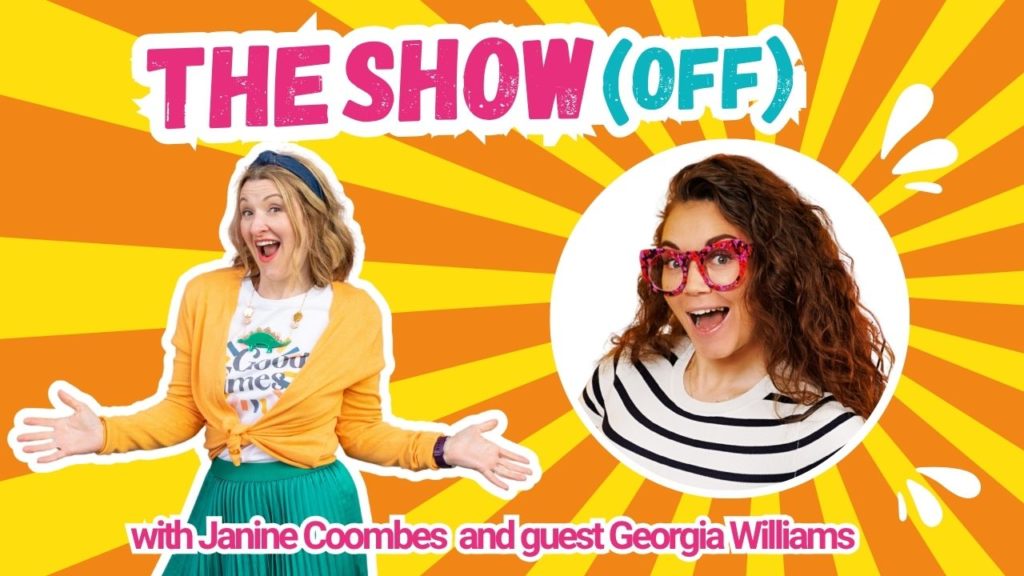
It’s something Georgia Williams, content creator, Canva designer, award-nominated podcaster and full-on CANVASSADOR (sing it!), and I talked about on a recent episode of The Show (Off).
G has built a business, Ray of Social, around helping other business owners create content with more joy and show up as exactly who they are online with amazing Canva graphics. And she’s very, very good at it. But she didn’t get there in a straight line.
The journey nobody tells you about
G describes her path to marketing as circuitous; retail, bad jobs, good jobs, a marketing agency she loved so much she didn’t care that it didn’t pay brilliantly or that she was commuting an hour each way with a small child.
And then the pandemic hit. The agency folded. And she found herself on furlough, doodling in Canva, opening an Etsy shop almost as an afterthought.
What followed was less ‘grand plan’ and more ‘following what felt right’. Testing things out and tweaking as she went.
“That’s how I run my life,” she told me. “Just keep going and tweak it as you go along.”
It’s not the tidy origin story we’re encouraged to tell about ourselves. But it’s real, and it’s recognisable, and it’s probably closer to the truth for most of us than we like to admit.
Being yourself is not a costume
One of my favourite moments in our conversation was when G mentioned that someone once thought she was dressing up as a character. Vintage clothes, funky glasses, bright colours. They assumed it was a persona she’d crafted for her content.
It wasn’t. That’s just who she is.
It sounds funny, but it points to something important. When you’re surrounded by people who dress in muted tones and take tasteful, unsmiling LinkedIn photos, someone who shows up in their full colour can seem like they’re performing. Like they’re trying too hard. Like they’re being a bit much.
G’s experience of this goes all the way back to childhood — being told, explicitly and implicitly, not to show off. Being a natural singer in a community where performance wasn’t celebrated. Watching friends react to her talent with “oh, she’s off again” rather than encouragement. She wouldn’t have called it bullying at the time. Looking back, she recognises it for what it was, and she recognises how deeply it shaped the way she showed up — or didn’t — for years afterwards.
The through-line from that kid who learned to make herself smaller to the business owner who now helps others take up more space is not a simple one. It involves, in G’s words, “a lot of trauma, a lot of years of experience, and a lot of inner searching.”
Which brings us to the process.
The three-step process we invented as a joke
We came up with this mid-conversation, half laughing at ourselves for turning a messy, non-linear personal journey into something that sounded like a framework. And yet, it seems to hold up:
Step one: Work through the truth (or not) of other people’s opinions.
The critical voices and “who does she think she is”. The opinions about what you should do with your talents. Sorting through all of that, with therapy or journalling or trusted people or simply time, is the whole foundation of reclaiming who you are and how you want to live your life.
Step two: Know who you are.
This is the one that sounds obvious and isn’t. Not who other people want you to be, not what the marketing experts say you should be, not a slightly safer, more palatable version of yourself. Actually knowing what you value, what you’re for, what you want.
G was clear that this isn’t a destination you reach and then you’re done. It’s something you keep coming back to, keep developing.
But having it, even imperfectly, is what protects you when things get loud.
Step three: The years of experience.
There’s no shortcut here. You have to do the work, make the things, cringe at them later, make better things. Your standards rise precisely because you’ve been doing it long enough to develop taste. The gap between your taste and your output closes slowly, and only if you keep going.
On starting before you’re ready
G had a YouTube channel sitting dormant for two years before she finally started using it. She knew she wanted to do it. She was waiting until she felt ready, until she had a few videos in the bank, until the conditions were right.
The thing that finally moved her? A line from Elizabeth Gilbert’s Big Magic and the idea that if you don’t act on your ideas, they float away and find someone else who will. The idea for the channel existed. It was hers. But it wouldn’t wait forever.
This is the tension G helps her clients navigate every day: the gap between the person you are offline and the version of yourself you’re brave enough to put online. Most of us have more personality, more wit, more warmth than we allow ourselves to show on social media. The fear of judgement of being ridiculous, or wrong, or too much, keeps us small and grey and cautious.
The antidote, G argues, isn’t bravado. It’s that strong inner knowing from step two. When you’re solid in who you are, other people’s opinions lose some of their grip. Not all of it. She’s clear that it never gets completely easy. But enough that you can act anyway.
Nobody likes everyone (except possibly David Attenborough)
We did briefly pause to consider whether everyone, truly, is Marmite. G suggested a possible exception: David Attenborough. I remain convinced there is someone out there who doesn’t like David Attenborough, and I intend to find them.
Is that you?! Email me or message me on LinkedIn! I want evidence of my hypothesis!
What G can do for you
Georgia’s Canva template library (700+ templates for service-based businesses, beautifully categorised and ready to use) lives at rayofsocial.com/the-templates. If you want to start smaller, her free guide on creating content with more confidence (which draws on her experience of being on The Voice) is at rayofsocial.com/thevoice.
Click here to watch the full episode of The Show (Off).
Show notes and links:
Georgia ‘G’ Williams, an award-nominated content creator, Canva designer, and host of the podcast Content with G, about creating social media content with joy and authenticity.
G shares her story of how she got to be where she is today. And how furlough led her to rediscover Canva, start an Etsy shop, and grow Ray of Social, including becoming a “Canvassador.”
We talk about how upbringing and peer judgment discouraged “showing off,” how trauma, inner work, and clarifying intentions helped G become more visible, and why she recently launched a YouTube channel after being inspired by the book Big Magic.
G explains aligning on- and offline personality in marketing, managing fear of judgment, and her subscription template library of 700+ categorized Canva templates for service-based businesses.
Claim your freebie (tied to her experience on the TV programme The Voice) here.
Check out G’s ‘The Library’. Over 700+ Canva templates for service-based businesses.
And while you’re at it, why not connect with me on LinkedIn too.
Find out more about my offer positioning and messaging services here.
Liked this episode? Have new ones plop freshly in your inbox every time they’re made!
Sign up for future Show (Off) episodes here:
Timestamps:
00:00 Show Intro
00:09 Meet Georgia G
01:03 Career Journey
03:23 Redundancy Reset
04:40 Canva Etsy Start
05:20 Canvassador Moment
05:38 Singing Roots
07:59 Stop Showing Off
09:32 Finding Your Voice
13:12 YouTube Launch
15:46 Progress Over Perfect
18:21 Authenticity Online
22:33 Handling Judgment
25:55 Canva Template Library
28:08 Freebie The Voice
29:08 Wrap Up Outro