How to do storytelling in your business with Karis Gill
How to do storytelling in your business with Karis Gill
Your Business Story Isn’t Boring — You Just Don’t Know Where to Look For It
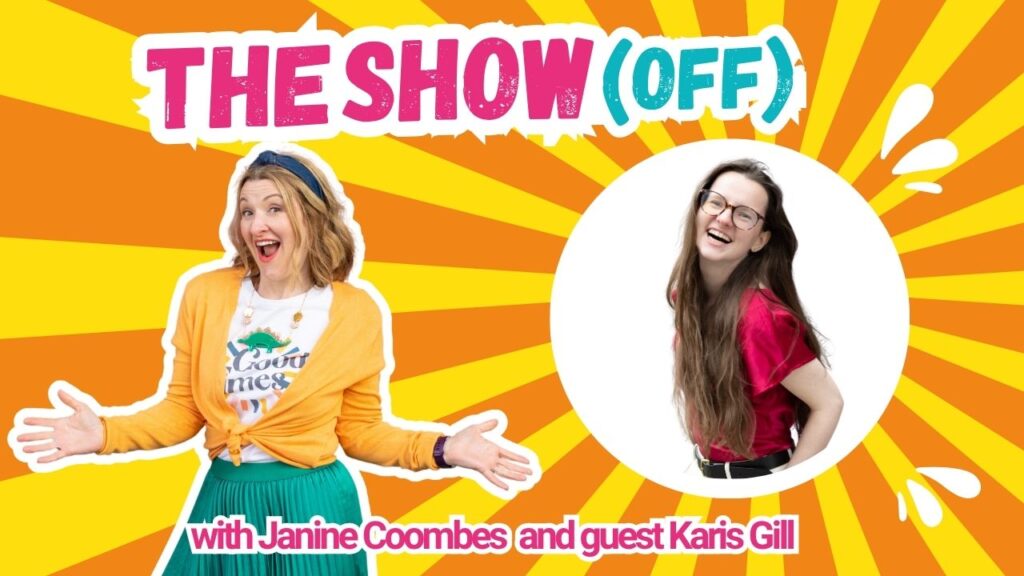
I had Karis Gill on The Show (Off) she scaled her sustainable gifting business, Social Stories Club, to multiple six figures in a year. The intriguing thing is that that nothing about the business had to change to make that happen. Not the product. Not the pitch. Not the market.
What changed was how they pitched it. They started using stories.
For two years, Social Stories Club got polite nods and rejection after rejection. Same idea, same product, same passion — met with “lovely idea, good luck with it” again and again. Then Karis found a psychology textbook in the library (working somewhere free, because that’s where you are when investors keeps saying no), she got curious about storytelling, and rebuilt the pitch deck around a story arc instead of the usual problem-solution-market-size info.
They started winning every funding pot they went for. So much so, they had too much money and had to stop applying!
People buy how you make them feel.
Karis was really generous with her knowledge in this conversation, she explained how you can say what you do until you’re blue in the face, but if you take someone on a journey to how they want to feel and how you get them there, that’s what actually makes people want to work with you.
Karis says she’s not naturally gifted at reading a room. She calls herself fairly non-reactive and has had to consciously learn what makes people feel things, almost by studying how characters in films react and borrowing from that. This isn’t some innate charisma superpower. It’s a skill she built, on purpose, which is reassuring!
“I don’t have any good stories” is common but not true
If you’ve ever thought your own story isn’t dramatic enough to be worth telling e.g. you didn’t survive a burning building or beat the odds in some cinematic way, Karis wants you to know that’s not what makes a story work.
What makes a story work is how much the character cares. That’s it. She used the example of waiting for a book to arrive in the post. Objectively a ‘nothing’ story. But tell someone how much you’d planned your afternoon around it, how frustrated you are that the postman’s been and gone and it’s still not there and suddenly there’s a story there.
The BLAST framework- endless stories on tap
Karis is refreshingly honest that she’s not a framework person, her brain resists them but she built one anyway because other people do like them and they kept asking! The BLAST framework is a handy way to go hunting for the stories you didn’t know you had:
- B — Beginnings: your first sales call, your first job, day one of the business
- L — Lows: the worst review, the moment it all nearly fell apart
- A — Amusements: the funny, unexpected stuff — and the one most people are too “professional” to use
- S — Statistics: any fact or figure, dressed up as a story instead of a slide
- T — Triumphs: the wins, the ones you’re maybe too British to talk about
Her advice: don’t just pick your favourite. Work through all five. Everyone, she says, can find at least three stories in each category once they know to look.
The one most of us avoid: humour
The category people find hardest is Amusements. Karis reckons that’s because we’re so quick to leave our sense of humour at the office door. We’re funny with our mates down the pub, then we show up online sounding like a LinkedIn thought-leadership template.
Her point: the version of you that makes your friends laugh is the version people actually want to connect with. Strip that out in the name of “professionalism” and you’re left with a facade nobody’s drawn to. Put it back in (she leans hard into comedy in her own newsletter especially) and people stop seeing a brand and start seeing a person. Then they follow. Then they book the call.
Why so many business stories fall flat
One thing Karis said stuck with me because I think it’s the actual reason so much content doesn’t land: a story without an emotional transformation is a flat story. If your character is excited at the start and still just as excited at the end, there’s nowhere for the reader to go. You need the shift from frustrated to relieved, doubtful to certain, or stuck to unstuck. That’s the bit that makes us emotionally invest in a story.
It also explains why treating a company as if it’s the character in the story rarely works. A character needs to be a real, named person who wants something and has something in the way of getting it.
Getting back to herself after a rocky experience in primary school
Karis went from being told she was stupid by a teacher in front of her whole class at ten years old to building a company and becoming a sought after speaker. Somewhere in there she held onto what she calls a “delusional, unwavering belief” in herself, and managed to reclaim who she thought she was.
Ironically, that was the story that fascinated me the most, since The Show (Off) is all about being 100% you. And yet Karis said she hadn’t shared the full story because she didn’t think it was very interesting! Watch for yourself and see what you think.
If you take one thing from this episode, let it be this: you already have the stories. You’ve just been trained to think they need to be bigger, sadder, or more dramatic than they are. They don’t. They just need to be told in a more compelling way.
Watch to the full conversation with Karis Gill on The Show (Off) here.
Connect with Karis:
And while you’re at it, why not connect with me on LinkedIn here.
And find out more about my offer positioning and messaging services here.
Liked this episode? Have new ones plop freshly in your inbox every time they’re made!
Sign up for future Show (Off) episodes here:
Timestamps:
00:00 Show Intro
00:26 Meet Karis Gill
01:16 Pitching With Story
04:46 Why It Worked
06:16 Emotion Driven Sales
10:21 Karis Origin Story
15:05 Storytelling Mistakes
17:43 Finding Your Stories
20:28 BLAST Framework
22:55 Humor In Business
24:58 Course And Next Steps
26:30 Wrap Up And Outro